
What is a food cooperative?

A food cooperative is an autonomous community of people who work together in solidarity to meet their needs related to access to high-quality food and products made in a responsible, sustainable, and ethical way.
It promotes food sovereignty, short supply chains, and agriculture that supports ecosystem and food diversity.

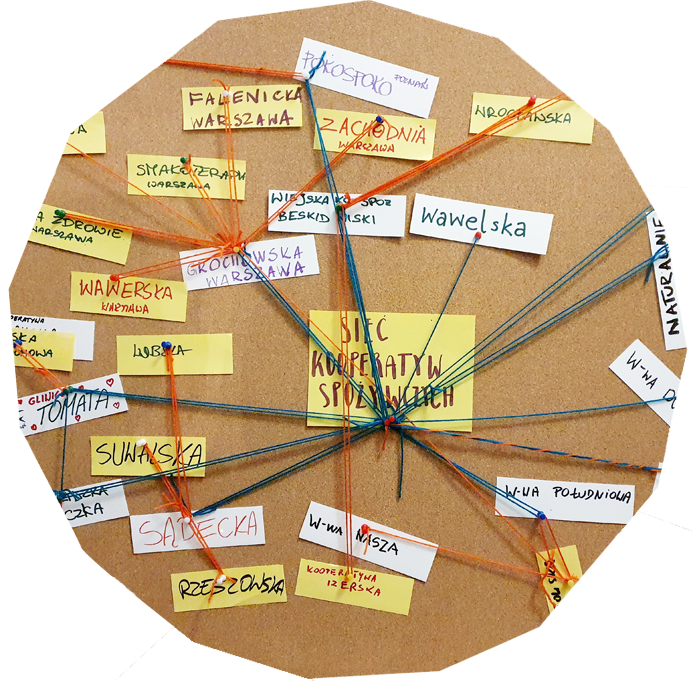
A food cooperative is a commons-based initiative, understood as a community of people and the social relationships that enable cooperative action and the sharing of the results of collective work. Its existence is grounded in trust, self-organization, shared responsibility, and joint effort, as well as the belief that universal access to local, high-quality food is a fundamental human right.

All members of the cooperative have equal rights and responsibilities, including equal access to roles and functions, as well as equal rights in decision-making.
A food cooperative may collect membership contributions and accumulate shared funds.
Membership is voluntary and unrestricted by any discriminatory conditions.

Anyone can establish a food cooperative and become part of one.

The activities of a food cooperative are based on care for the common good of local communities and their natural and cultural environments, rather than on the pursuit of profit maximization.

The goals of a food cooperative are pursued through:

  • the distribution of food and products,
  • socially just and environmentally responsible cooperation with people who locally produce food and artisanal goods,
  • promoting short food supply chains,
  • carrying out educational activities, including disseminating knowledge about food and agroecological methods of production, as well as cooperative values and practices,
  • organizing community-building events and collaborating with other entities in support of food sovereignty.

A food cooperative acts in accordance with the Rochdale values:

  • voluntary and open membership,
  • democratic governance,
  • joint creation and stewardship of the cooperative’s assets,
  • autonomy and independence,
  • education, training, and information,
  • cooperation among cooperatives,
  • concern for the community.

Models of operation in food cooperatives

Individual food cooperatives operate in different ways on a daily basis. In Poland, most of them are informal groups that often use spaces provided by cultural institutions, schools, or local community centers. They meet once a week or twice a month, and in between meetings they place orders with farmers and local producers. Usually, a different person is responsible for contact with each supplier. Some cooperatives order only products that are certified organic. Many choose a “trust-based certificate,” meaning they order from farmers or processors they personally trust.
Most often, every member of the cooperative is required to contribute a small, regular number of volunteer hours each month for the benefit of the community.

Although “locality” is a very important value for most cooperatives, they differ in how they define this concept. Some order only products available within the voivodeship in which the cooperative operates; others limit themselves to products from within Poland. There are also cooperatives that take a more liberal approach to locality – for example, they order citrus fruits that are not grown in Poland, but choose to buy them from other cooperative institutions in the countries of origin.

They also differ in their definitions of “healthy food” or “nutritious food.” Many cooperatives do not sell meat, and some avoid all animal-derived products. They adopt various criteria for selecting suppliers and available products. The criteria used when choosing a supplier help reveal the logic behind how cooperatives operate. The most important requirement is that the producer works locally; second, that they minimize the use of plant protection products; and third, that they are personally known to someone within the cooperative.
Thus, the key principles are locality and rootedness, health, environmental considerations, and the trust of other members of the cooperative community.

I agree to receive a newsletter from Food Cooperatives Network Association (Stowarzyszenie Sieć Kooperatyw Spożywczych) and to process my personal data according to this GDPR Policy.